
Brightidea Alternatives: Traction Technology vs. Brightidea for Enterprise Innovation Teams
Who this post is for: Innovation managers, Chief Innovation Officers, and digital transformation leads who are evaluating Brightidea and want an honest comparison of where it excels and where Traction Technology is the stronger choice for full lifecycle innovation management.
Brightidea is one of the most recognized names in idea management. With over two million users worldwide and a long track record of running large-scale crowdsourcing and hackathon programs, it has earned its reputation as a strong front-end innovation tool.
But enterprise innovation teams increasingly find that idea management alone is not enough. When the mandate expands to include technology scouting, RFI management, pilot governance, open innovation, and demonstrating measurable ROI — and when AI needs to operate across the full lifecycle rather than just at the idea submission stage — the limitations of a platform built primarily for crowdsourcing become apparent.
This post compares Brightidea vs. Traction Technology across the capabilities that matter most to enterprise innovation programs in 2026.
Brightidea vs. Traction Technology: Side-by-Side Comparison
Platform Positioning at a Glance
Brightidea positions itself as the number one idea management platform globally, with over two million users and $15 billion in recorded business impact. Its core strength is crowdsourcing at scale — collecting ideas from large employee populations, running hackathons, and managing the early stages of the innovation pipeline. It offers six distinct products — Program, Hackathon, Lab, Ecosystem, Transformation, and Pipeline — that can be combined depending on program needs.
Traction Technology is an AI-powered innovation management platform built for the full lifecycle — from technology scouting and open innovation through idea management, RFI management, pilot management, and portfolio tracking. Built on Claude (Anthropic) and AWS Bedrock with a RAG architecture, AI is embedded across every stage of the process. Recognized by Gartner. SOC 2 Type II certified.
👉 Try Traction AI free — see the full lifecycle capability before you commit · View Pricing
The Core Difference: Crowdsourcing Platform vs. Full Lifecycle Innovation Management
Brightidea was designed to solve a specific problem: getting ideas out of employees' heads and into a structured pipeline at scale. It does this well. The limitation is that idea collection and evaluation is where Brightidea's core strength ends. Technology scouting, RFI management, vendor evaluation, pilot management, and portfolio-level ROI tracking are not native capabilities of the platform.
Traction was designed to manage the entire innovation lifecycle — from the moment a trend is identified or an idea is submitted, through vendor evaluation, RFI management, pilot governance, and measurable business outcomes. The practical difference is what your team can do after an idea is selected. In Traction, that idea connects directly to a technology scouting workflow, a vendor RFI process, a pilot program, and a portfolio view — all in the same system. In Brightidea, that handoff typically happens outside the platform.
Idea Management and Innovation Campaigns
Both platforms support idea management. Brightidea is genuinely strong here — its campaign setup, voting mechanisms, discussion threads, and hackathon tools are well regarded, and its scale is real. For organizations whose primary goal is running large employee crowdsourcing programs and hackathons with tens of thousands of participants, Brightidea is a proven option.
Traction supports internal idea campaigns across teams and business units and external open innovation challenges with startups, vendors, and partners. Where Traction diverges from Brightidea is what happens after an idea is selected. In Traction, an approved idea connects directly to the RFI management workflow, the pilot management workflow, and the portfolio view — all in the same system. In Brightidea, execution typically requires separate tools, creating handoff gaps where context breaks and institutional memory fragments.
Technology Scouting and Startup Intelligence
This is one of the most significant capability gaps between the two platforms.
Brightidea does not include a proprietary company database or native AI scouting capability. Technology scouting — the proactive, external discovery of emerging vendors and technologies relevant to your strategic priorities — is not a core Brightidea function.
Traction AI is built on a RAG architecture that retrieves from a database of over 1 million verified companies — producing shortlists that can be presented to business unit sponsors with confidence that every company on the list exists and is relevant to the specific problem being addressed. AI-generated Company Snapshots deliver instant intelligence on any company in seconds. AI-generated Trend Reports surface emerging technology signals tied directly to your strategic priorities and link them to specific companies your team can evaluate and engage immediately. Full Crunchbase integration is included at no extra cost.
For enterprise teams with active technology scouting programs, Traction is purpose-built for this function. Brightidea is not.
RFI Management — The Function Brightidea Does Not Have
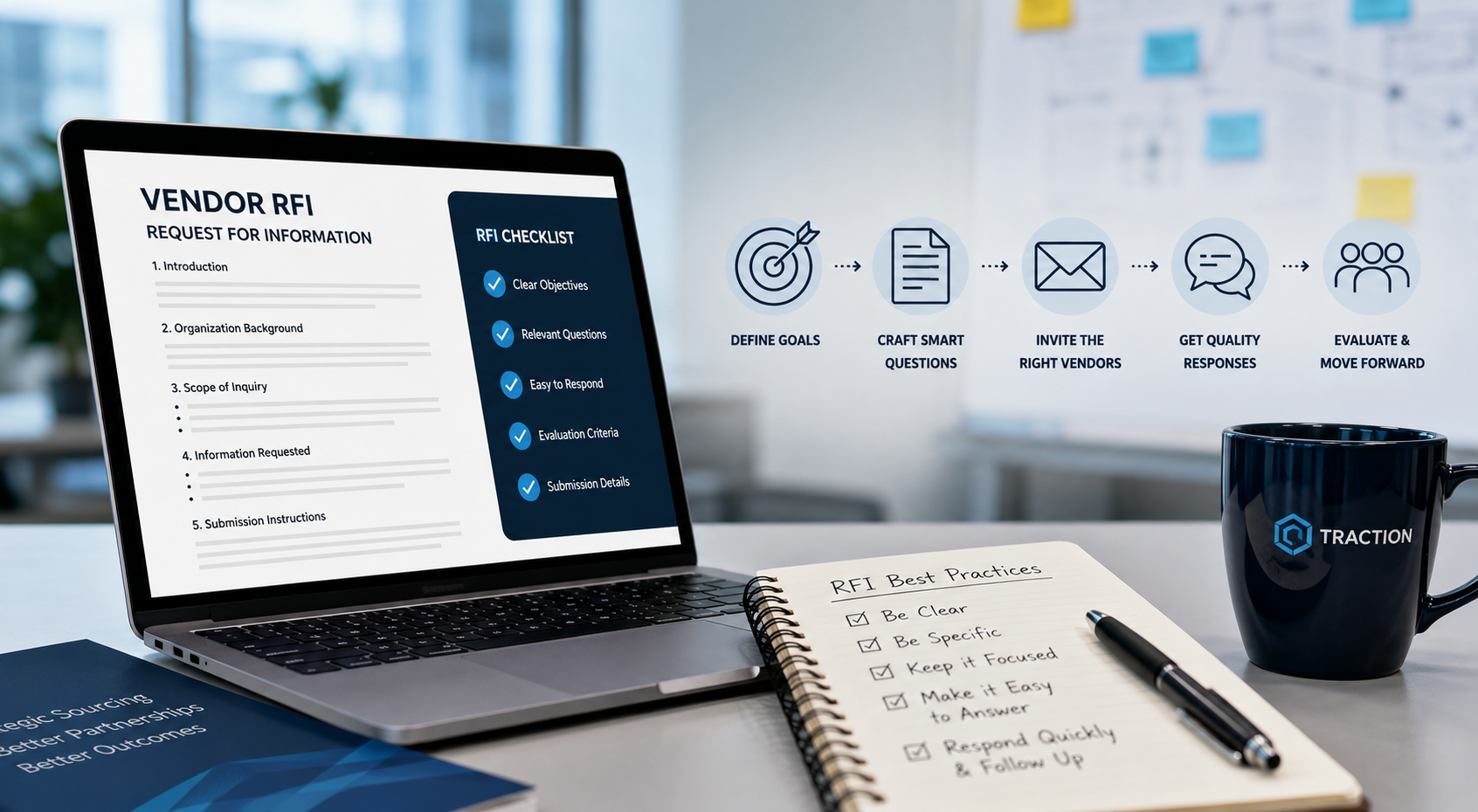
When a technology or vendor has passed initial scouting and evaluation, the next step for most enterprise innovation programs is a structured RFI — a formal request for information that enables deeper vendor assessment before a pilot commitment is made.
Brightidea does not include native RFI management. Teams using Brightidea manage vendor RFI workflows in separate tools — email, procurement systems, custom forms — creating a handoff gap between the evaluation layer and the vendor engagement layer where context breaks and institutional memory is lost.
Traction includes a native vendor portal and RFI management workflow — connected to the technology scouting pipeline on one side and the pilot management workflow on the other. A vendor identified through scouting can be moved into a structured RFI process without leaving the platform. The RFI outcomes feed directly into the pilot brief and governance workflow.
This end-to-end connection — from discovery through RFI through pilot through outcome documentation — in a single connected system is the capability that no competitor in the category currently replicates.
Pilot Management and Execution Governance
Brightidea includes a Lab product described as idea incubation — but this is not the same as dedicated pilot governance. Stage gates, milestone tracking, decision gate documentation, stall detection, and structured outcome records are not core Brightidea capabilities.
For enterprise teams accountable for delivering technology pilots that produce scale or stop decisions based on documented evidence, this gap creates a significant disconnect between the platform's idea management strengths and the execution workflows that determine whether evaluated technologies ever reach deployment.
Traction includes dedicated pilot management as a core platform function. Stage gates, milestone tracking, stall detection, decision gate documentation, and structured closure records are built into the same system as scouting, RFI management, and evaluation. Every pilot has a brief, a decision owner, a milestone schedule, and a closure record that feeds the institutional memory of the program.
Pricing Transparency
Brightidea pricing is modular and quote-based — each of the six products is priced separately, implementation fees apply, and the total cost of assembling full lifecycle coverage is not transparent before entering a sales process.
Traction pricing is public. One subscription at $4,000 per year gives the full capabilities of an enterprise innovation team — every module, every AI capability, and unlimited View-Only access for every stakeholder across the organization at no additional cost. No setup fee. No data migration charges. No implementation project before value is delivered.
Who Should Choose Brightidea
Brightidea is the stronger choice when:
The program's primary mandate is employee idea crowdsourcing at scale — collecting and managing ideas from large employee populations across business units and geographies, with gamification, voting, and engagement features.
Hackathon management is a core program function — Brightidea's dedicated Hackathon product is purpose-built and a genuine strength.
The organization does not currently need native technology scouting, RFI management, or pilot governance — and is comfortable managing those functions in separate tools.
The innovation program is at an early stage and the primary goal is building an innovation culture through broad employee engagement rather than managing an external vendor pipeline.
Who Should Choose Traction Technology
Traction is the stronger choice when:
The program needs the full innovation lifecycle in a single connected system — from technology scouting through RFI management through pilot governance through outcome documentation — without handoffs to separate tools at each stage.
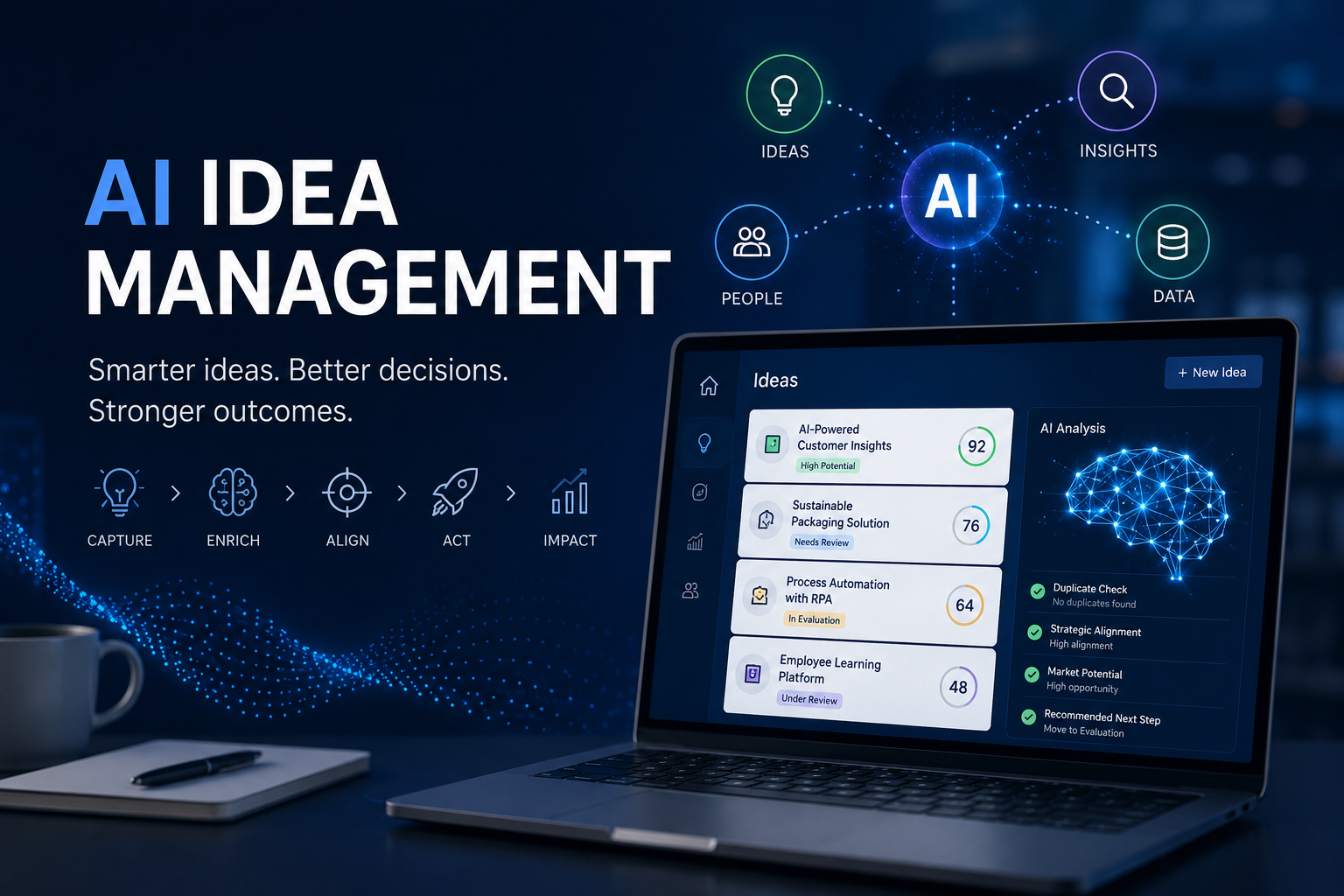
AI embedded across the full workflow matters — not AI features at the idea submission stage, but AI scouting from a verified database of over 1 million companies, AI Trend Reports, AI Company Snapshots, and AI duplication detection operating across the entire program.
Technology scouting is a core program function — the program needs to proactively identify emerging vendors and technologies rather than waiting for them to appear through inbound pitches or hackathon submissions.
Pricing transparency matters — the team wants to evaluate fit and understand total cost before engaging a sales team.
The program is accountable for business outcomes — evaluated technologies, managed vendor RFI processes, completed pilots, and demonstrated ROI — not just idea intake and engagement metrics.
Frequently Asked Questions
What is the main difference between Traction Technology and Brightidea?
Brightidea is purpose-built for employee idea crowdsourcing at scale — collecting ideas from large populations, running hackathons, and managing the front end of the innovation pipeline. Traction Technology is built for the full innovation lifecycle — from technology scouting through RFI management, pilot governance, and portfolio reporting. The practical difference is what happens after an idea is selected: in Traction it connects to RFI, pilot, and portfolio workflows in the same system; in Brightidea execution typically requires separate tools.
Does Brightidea include technology scouting?
No. Brightidea does not include a proprietary company database or native AI scouting capability. Traction AI retrieves from a database of over 1 million verified companies using RAG architecture — producing shortlists without hallucinated company names — with full Crunchbase integration at no extra cost.
Does Brightidea include RFI management?
No. RFI management is not a core Brightidea capability. Traction includes a native vendor portal and RFI management workflow connected to scouting on one side and pilot management on the other — enabling the full workflow from vendor discovery through RFI through pilot in a single connected system.
Does Brightidea include pilot management?
Brightidea includes a Lab product for idea incubation but not dedicated pilot governance — stage gates, milestone tracking, decision gate documentation, and structured outcome records are not core capabilities. Traction includes dedicated pilot management as a core platform function built into the same system as scouting, RFI management, and evaluation.
What is the pricing difference between Traction and Brightidea?
Traction is one subscription at $4,000 per year — every module, every AI capability, unlimited View-Only access, no setup fee, no data migration charges, public pricing at tractiontechnology.com/pricing. Brightidea uses modular pricing — six separate products priced individually, implementation fees apply, and total cost is not transparent before entering a sales process.
Is Brightidea recognized by Gartner?
Yes — both Brightidea and Traction Technology have been recognized by Gartner. Traction has been recognized for two consecutive years including the February 2026 report on AI-Enabled Innovation Platforms.
When does it make sense to use both Brightidea and Traction?
Some organizations use Brightidea for large-scale employee engagement and hackathon programs — where its scale and gamification features are genuinely differentiated — while using Traction for technology scouting, RFI management, and pilot governance. This two-platform approach addresses the handoff gap but adds coordination overhead and cost. For organizations whose program spans both employee crowdsourcing and external vendor management, evaluating whether a single unified platform covers the full need is worth the comparison exercise.
What AI capabilities does Brightidea have compared to Traction?
Brightidea has AI features for idea scoring and evaluation support at the idea submission stage. Traction AI is built on Claude (Anthropic) and AWS Bedrock with a RAG architecture — operating across the full lifecycle including scouting from a verified database of over 1 million companies, AI Trend Reports, AI Company Snapshots, duplication detection across companies, ideas, and pilots, and decision coaching. The architectural difference is significant: Brightidea has AI features at the front end, Traction has AI embedded throughout.
Related Reading
- What Is the Best Innovation Management Software for Enterprise Teams?
- How to Choose Between Innovation Management Platforms
- ITONICS Alternatives: Traction Technology vs ITONICS for Enterprise Innovation Teams
- HYPE Innovation Alternatives: Traction Technology vs HYPE Innovation for Enterprise Teams
- Traction Technology vs Qmarkets: Which Innovation Management Platform Delivers End-to-End Results
- Why Pilot Management Software Is the Missing Link in Innovation Execution
- What Is Innovation Management? A Practical Definition for Enterprise Teams
About Traction Technology
Traction Technology is an AI-powered innovation management software platform trusted by Fortune 500 enterprise innovation teams including Armstrong, Bechtel, Ford, GSK, Kyndryl, Merck, and Suntory. Built on Claude (Anthropic) and AWS Bedrock with a RAG architecture, Traction manages the full innovation lifecycle — from technology scouting and open innovation through idea management, RFI management, and pilot management — with AI-generated Trend Reports, AI Company Snapshots, duplication detection, and decision coaching built in.
Traction AI scouts across a database of over 1 million verified companies — retrieving real, current results rather than generating hallucinated names. One annual subscription at $4,000 gives you the full capabilities of an enterprise innovation team — every module, every AI capability, and unlimited View-Only access for every stakeholder at no additional cost. No setup fee. No data migration charges. Featured in the Gartner Market Guide for AI-Enabled Innovation Management Platforms, February 2026. SOC 2 Type II certified.
Try Traction AI Free · View Pricing · Schedule a Demo · tractiontechnology.com






.webp)